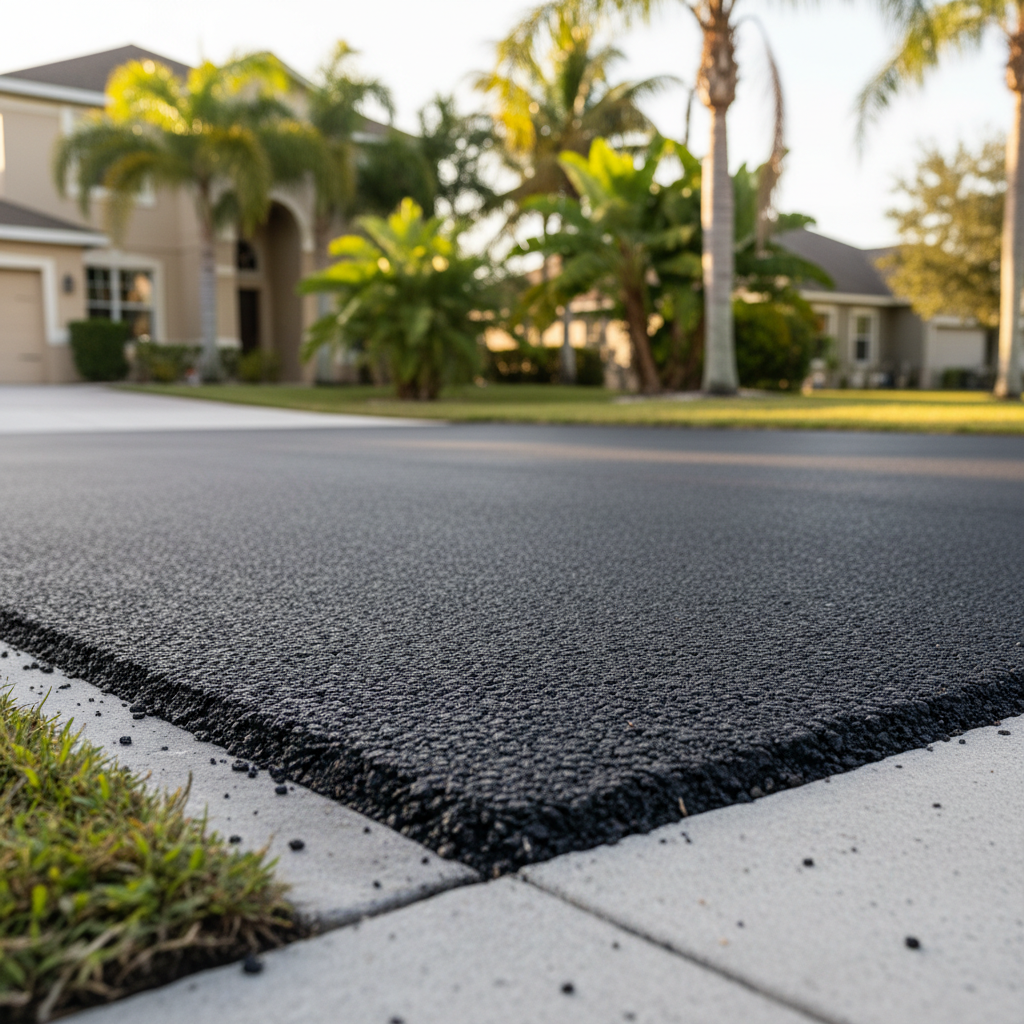
Alright, let's talk about commercial asphalt. Now, I know what you're thinking – 'commercial' usually means big parking lots, not my home. But sometimes, homeowners in places like Bradenton, especially those with larger properties, long driveways, or even shared private roads, start looking at commercial-grade stuff. They want something that lasts, something tough. And that's smart. But there are a lot of misconceptions out there. I get questions about this all the time, so let's clear some things up.
Is commercial asphalt really that different from residential?
You bet it is. It's not just a fancy name, you know. Commercial asphalt mixes are designed for much heavier loads and higher traffic volumes. Think about a busy shopping center parking lot versus your average residential driveway. The commercial mix typically uses a coarser aggregate – bigger stones – and often a higher percentage of asphalt binder. This gives it superior strength and resistance to rutting and cracking under constant heavy use. Residential mixes are fine for cars and light trucks, but if you've got heavy equipment, RVs, or just a really long, busy driveway, commercial-grade might be exactly what you need. It's built to take a beating, which is why it costs more, but it also pays off in longevity.
Will commercial asphalt last longer on my property?
Generally, yes, it should. Because it's engineered for tougher conditions, when you put it on a residential property that sees less abuse than a commercial lot, it's going to hold up exceptionally well. We're talking about potentially decades of service if it's installed right and maintained properly. The Florida sun, with its intense UV rays and heat, is brutal on any asphalt, but a tough commercial mix has a better fighting chance against premature aging. You'll still need to sealcoat it and address any cracks, sure, but the underlying structure is just tougher from the get-go.
How much more expensive is commercial asphalt compared to residential?
Expect to pay more, for sure. There's no getting around that. The materials themselves are a bit pricier, but the real difference often comes down to the installation. Commercial jobs typically involve more extensive base preparation, thicker layers of asphalt, and often require heavier equipment and more specialized crews. It's not usually a small percentage increase; it can be significantly more per square foot. It's an investment, not just an expense. You're paying for that extra durability. At Absolute Asphalt Co, we always give you a clear breakdown so you know exactly what you're getting into.
Do I need a thicker base for commercial asphalt?
Absolutely. The base is the foundation, and it's critical. If you're going with commercial-grade asphalt, you're doing it for strength and longevity, and that strength starts underneath. A typical residential driveway might get 4-6 inches of compacted aggregate base, but for commercial applications, we're often looking at 6-12 inches, sometimes even more, depending on the expected loads and soil conditions. Here in Bradenton, especially in areas with sandy or high water table soils, a robust, well-drained base is non-negotiable. Skimping on the base means you're just putting a strong surface over a weak foundation, and that's a recipe for failure, no matter how good your asphalt mix is.
What kind of maintenance does commercial asphalt require for a homeowner?
It's pretty similar to residential asphalt, just less frequent or less urgent, thanks to its inherent toughness. You'll still want to sealcoat it every few years – maybe every 3-5 years instead of 2-3 for residential, depending on traffic and sun exposure. This protects it from UV damage, water penetration, and spills. You'll also need to keep an eye out for cracks and get them filled promptly. Don't let small cracks turn into big potholes. Good drainage is key too; make sure water isn't pooling anywhere. Regular sweeping to remove debris helps, especially if you have heavy vehicles tracking dirt onto the surface. Basically, treat it well, and it'll treat you well for a long, long time.
Can I just use commercial asphalt for a section of my driveway?
You could, but it's generally not recommended for aesthetic or practical reasons. If you're only paving a section, you'll have a noticeable difference in appearance and possibly in elevation. The different mixes might also expand and contract at different rates, which could lead to issues at the transition point. If you've got a specific area that sees heavy traffic, like a turnaround for an RV or a delivery truck, we can certainly design a solution that reinforces that specific section with a stronger base and thicker asphalt. But for a seamless, long-lasting surface, it's usually best to pave the entire area with a consistent material and thickness.
What are the biggest mistakes homeowners make when considering commercial asphalt?
I see a few common ones. First, underestimating the cost. They hear 'commercial' and think 'tougher,' but don't always factor in the significantly higher price tag for proper installation. Second, not doing enough research on the contractor. Just because a company does big commercial jobs doesn't mean they're the right fit for your specific residential project, or that they'll give your property the attention it deserves. Always get multiple quotes and check references. Third, neglecting the base. As I said before, a strong surface on a weak base is a waste of money. And finally, thinking that commercial asphalt means 'no maintenance ever.' It's tougher, but it's not indestructible. You still need to protect your investment with regular sealcoating and crack filling. If you're in Bradenton and thinking about a heavy-duty solution, give Absolute Asphalt Co a call. We'll walk you through all your options and make sure you get exactly what you need, no more, no less.